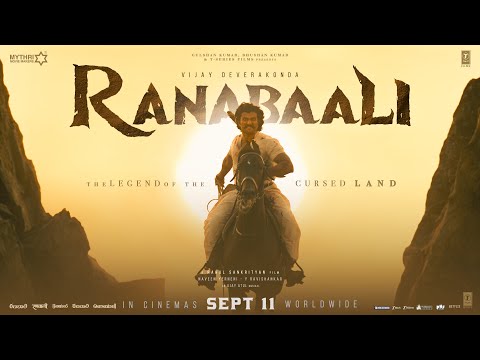
Ranabaali (2026)
16 Oct 2026 ● Telugu ● Running Time: TBA
Set in 19th-century British India, a fierce leader rises from a drought-stricken land to fight colonial oppression and atrocities. Inspired by real incidents, his journey is one of rebellion, sacrifice, and legacy.
Cast: Rashmika Mandanna, Vijay Devarakonda
Crew: Rahul Sankrityan (Director), Jishnu Bhattacharjee (Director of Photography), Nirav Shah (Director of Photography), Ajay Gogavale (Music Director), Ajay-Atul (Music Director)
Genres: Action, Drama, History, Historical Epic, Action Epic, Period Drama
Release Dates: 16 Oct 2026 (United States | Limited Theatrical Release), 16 Oct 2026 (India | Wide Theatrical Release)
Telugu Name: రానాబాలి
Did you know? This marks Vijay Deverakonda’s second collaboration with director Rahul Sankrityan, following their successful 2018 supernatural comedy Taxiwaala. Read More
No reviews available. Click here to add a review.
Actress
Actor
Supporting Actor
Supporting Actor
Supporting Actor
Supporting Actor
Supporting Actor
Supporting Actor
Supporting Actor
Supporting Actor
Direction
Director
Production
Producer
Production Company
Distribution
Distributor
Prathyangira Cinemas (United States)
Writers
Story Writer
Camera and Electrical
Director of Photography
Music
Music Director
Art
Art Director
Editorial
Editor
Film Type:
Theatrical
Language:
Telugu
Colour Info:
Color
Frame Rate:
24 fps
Aspect Ratio:
2.39:1 (Scope)
Stereoscopy:
No
Movie Connection(s):
Trivia:
South African-American actor Arnold Vosloo, best known for portraying the iconic villain Imhotep in The Mummy (1999), makes his Telugu cinema debut as Sir Theodore Hector, the film’s principal British antagonist.
This marks Vijay Deverakonda’s second collaboration with director Rahul Sankrityan, following their successful 2018 supernatural comedy Taxiwaala.
Although Singanamala Bobbili Ranabaali is fictional, the story unfolds during the real Great Madras Famine of 1876–1878, worsened by exploitative British colonial grain-export policies.
This marks Vijay Deverakonda’s second collaboration with director Rahul Sankrityan, following their successful 2018 supernatural comedy Taxiwaala.
Although Singanamala Bobbili Ranabaali is fictional, the story unfolds during the real Great Madras Famine of 1876–1878, worsened by exploitative British colonial grain-export policies.